Substrate Prep That Determines Coating Lifespan
Industrial Epoxy Flooring in Angola and surrounding areas for manufacturing and agriculture-adjacent facilities requiring coatings rated for chemical exposure and heavy equipment loads
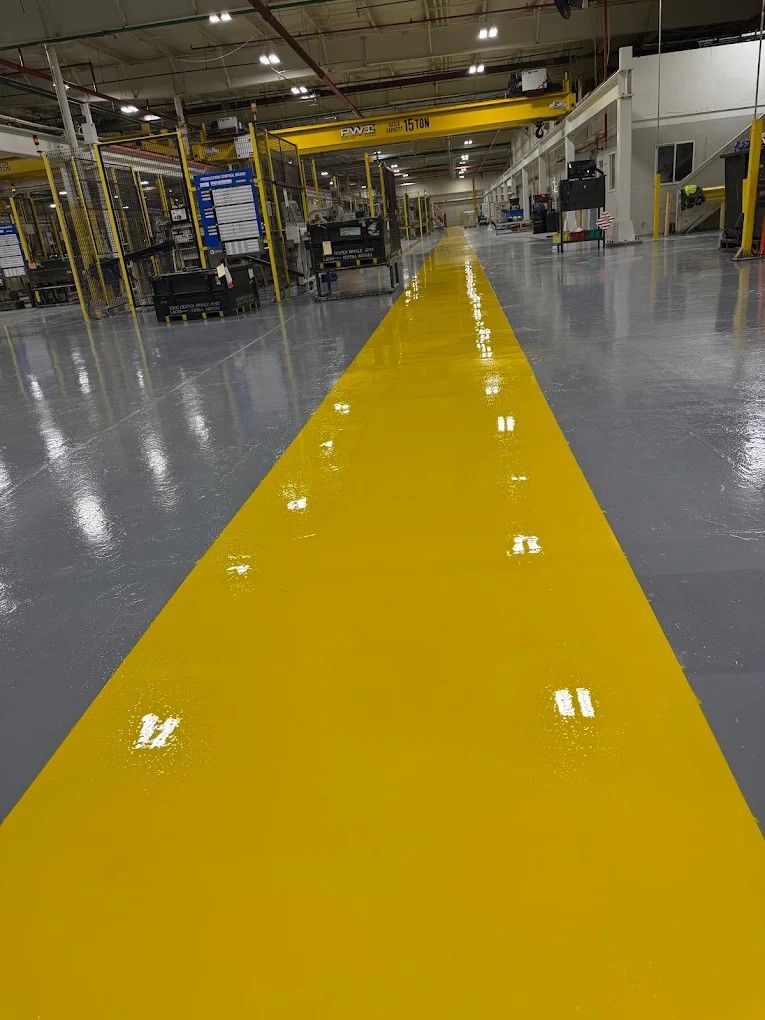
Northeast Indiana's manufacturing and agriculture-adjacent industrial facilities need coatings rated for chemical exposure, heavy equipment loads, and sustained impact, but the wrong system or inadequate prep fails fast under production environment conditions. Surface preparation to ICRI CSP standards—using shot blasting or diamond grinding—is the factor that determines whether a coating lasts three years or fifteen in a facility handling forklifts, pallet jacks, and chemical processes. Pro Concrete Flooring Solutions LLC applies heavy-duty floor coating systems where substrate prep is not skipped or abbreviated, and owner-supervised mixing ensures product ratios are correct before any coating hits the floor.
Industrial epoxy work involves evaluating the existing slab for surface contamination, previous coatings, and structural soundness, then mechanically profiling the concrete to create the surface texture required for proper coating bond. ICRI CSP-standard preparation removes laitance, oils, and weak surface material so the epoxy bonds to sound concrete capable of supporting the loads your facility generates.
Schedule an on-site evaluation to assess your facility's substrate condition and determine what prep level the slab requires in Angola, Auburn, Kendallville, and surrounding areas.
What ICRI CSP Surface Preparation Actually Accomplishes
ICRI CSP standards define the concrete surface profile depth required for mechanical coating bond under industrial loading conditions. Shot blasting or diamond grinding creates the texture that allows epoxy to lock into the slab instead of sitting on top of a smooth or contaminated surface. Prep is the job in industrial environments, not just the step before the job, because coatings applied over inadequate surface profiles debond under forklift traffic and chemical exposure regardless of product quality or application precision.
After the coating cures and production equipment returns to the floor, you notice the surface no longer produces concrete dust that settles on machinery and products. Chemical spills wipe clean without etching or staining the slab, and dropped tools or materials no longer chip the floor surface. Forklift traffic and pallet drag patterns stop leaving visible wear marks, and the floor maintains traction under wet conditions instead of becoming slick when liquids are present.
Industrial coating systems address surface durability and chemical resistance but do not repair structural foundation issues, expansion joint failures, or active groundwater intrusion. Facilities with load-bearing cracks or moisture problems require engineering assessment and remediation before any coating system will perform correctly under industrial use.
Answers to Frequent Industrial Flooring Questions
Facility managers and operations personnel in Northeast Indiana manufacturing and agriculture-adjacent facilities often need specific information about how industrial coating projects affect production schedules and what determines system longevity.
What does ICRI CSP surface preparation involve?
ICRI Concrete Surface Profile standards define texture depth categories measured in mils. Shot blasting propels steel media at high velocity to remove surface contamination and create the required profile, while diamond grinding uses rotating abrasive heads to achieve similar results. The profile depth must match the coating manufacturer's bond requirements or the system fails prematurely.
How does chemical exposure in Angola-area industrial facilities affect coating selection?
Manufacturing and agriculture-adjacent operations often involve oils, solvents, fertilizers, and cleaning chemicals that etch or soften standard epoxy formulations. The coating system must be rated for the specific chemicals present in your facility, and that determination requires knowing what substances contact the floor during normal operations.
Why does owner supervision matter on industrial installs?
Industrial coating failures cause production downtime, safety hazards, and expensive remediation that affects your operation for weeks. Owner-supervised mixing eliminates the ratio errors that cause soft spots, incomplete curing, and premature debonding—mistakes at this stage cost far more in an industrial facility than on a residential garage floor.
How long does industrial floor coating work take from start to finish?
Project duration depends on facility size, surface prep requirements, cure windows, and whether work can be staged in sections. Surface preparation typically consumes more time than coating application, and cure periods before resuming forklift traffic add days to the schedule regardless of coating speed.
What types of industrial equipment can coated floors handle?
Properly prepared and applied industrial epoxy systems resist point loads from pallet jack wheels, sustained pressure from stationary machinery, abrasion from dragged materials, and impact from dropped components. The coating does not make the underlying concrete stronger—it protects the surface from chemical attack and prevents concrete dusting while maintaining the slab's existing load capacity.
Pro Concrete Flooring Solutions LLC applies industrial epoxy with the understanding that prep is the job and owner-supervised application ensures the work is done right the first time. Request a facility assessment to review your substrate condition and chemical exposure requirements before any coating system is recommended.