
High-End Floors That Function as Features
Metallic Epoxy Flooring in Angola for lakefront homes and showroom-style garages where the floor is part of the design
Controlled metallic pigment application determines whether the finished pattern looks deliberate or accidental. The pour technique and the way the pigment is manipulated during application control how the metallic effect develops across the surface, and that process requires hands-on supervision. Pro Concrete Flooring Solutions LLC installs metallic epoxy systems along the Lake James corridor and in high-end residential spaces where the floor is expected to impress, not just perform. You see a finished pattern that reads as intentional, because the pigment movement was controlled throughout the application instead of left to chance.
The base coat goes down first, then metallic pigment is added and manipulated using specific tools and techniques that guide how the pigment flows and where it settles. The pattern develops as the material cures, and adjustments during the working window determine the final appearance. No two metallic floors are identical because the pigment movement varies with each pour, but every floor is the result of controlled application rather than a random outcome.
Request a consultation to review metallic color options and discuss the design effect you want before the pour is scheduled.
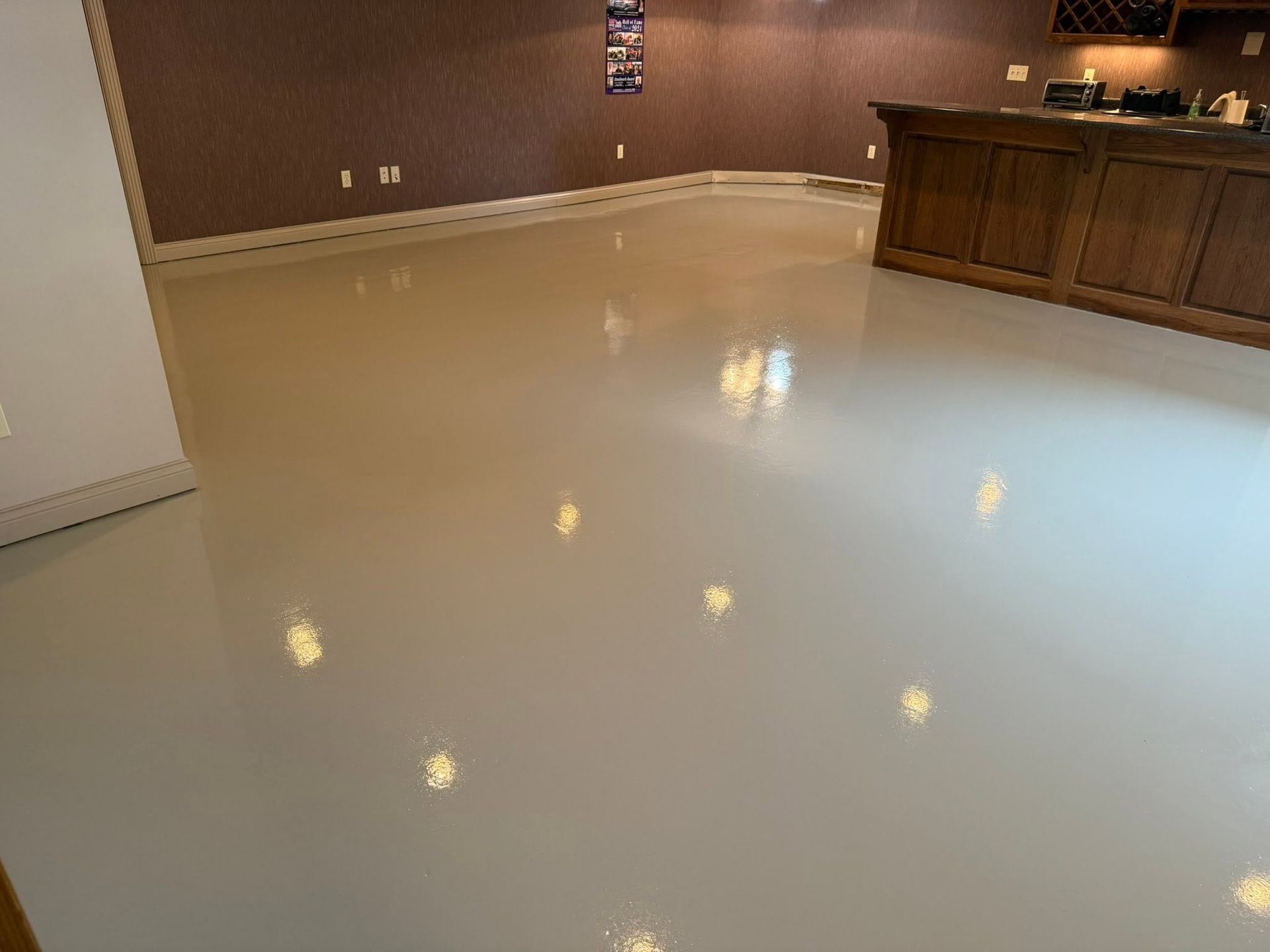
How Metallic Pigment Application Is Controlled
After the base coat is applied, metallic pigment is introduced and spread across the surface using rollers, brushes, and airflow. The pigment suspends in the wet epoxy and moves as the material is worked, creating the swirling or marbled effect associated with metallic systems. The applicator controls how much pigment is added, where it is concentrated, and how long it is allowed to move before the epoxy begins to set. Those decisions happen in real time and cannot be corrected once the material starts to cure.
Once cured, the floor has depth and visual movement that changes depending on lighting and viewing angle. The metallic effect is visible through the clear topcoat, and the surface reflects light in a way that makes the floor look three-dimensional. The coating resists vehicle fluids and regular foot traffic, so it performs as a working garage floor while functioning as a visual feature in the space.
Metallic systems require proper subfloor preparation and consistent environmental conditions during application. Humidity and temperature affect how the pigment moves and how the epoxy cures, so installation timing is planned around weather conditions and the ability to control the workspace environment. Rushed installations or uncontrolled conditions produce unpredictable results that cannot be fixed after the fact.
Answers to Frequent Service Questions
Lake-home owners and showroom garage clients in Angola and surrounding areas ask about metallic color options, application control, and whether the floor performs as well as it looks. The questions below address those considerations before scheduling the work.
What makes metallic epoxy flooring different from standard epoxy?
Metallic systems use pigment suspended in the epoxy that creates a visual effect as the material cures. The pigment is manipulated during application to control the pattern, and the finished floor has depth and light reflection that standard epoxy coatings do not produce. The installation process is more technique-dependent than standard systems.
How do you control the metallic pattern during installation?
The pattern is controlled by adjusting pigment concentration, manipulating the wet material using tools and airflow, and timing those adjustments within the working window before the epoxy begins to set. The applicator makes decisions during the pour based on how the pigment is moving, and those decisions determine the final appearance. No template or formula can replicate the same pattern twice.
Can metallic epoxy flooring handle regular garage use in Angola?
Metallic systems are topcoated with a clear urethane or epoxy sealer that protects the metallic layer and provides the same chemical resistance as standard epoxy floors. The floor resists vehicle fluids, foot traffic, and light equipment movement, so it functions as a working garage surface while maintaining its appearance.
How long does a metallic epoxy floor take to install?
Installation timing depends on subfloor prep requirements and the size of the space, but most residential garage projects complete within several days once prep is finished. The metallic pour must occur under controlled conditions, so scheduling depends on weather and the ability to regulate temperature and humidity in the workspace.
What happens if the metallic pattern does not turn out as expected?
The pattern is discussed and agreed upon before the pour begins, and the applicator supervises the pigment manipulation throughout the process to ensure the result matches the intended design. Once the material begins to cure, adjustments are no longer possible, which is why owner-supervised application is standard on every metallic install at Pro Concrete Flooring Solutions LLC.
Pro Concrete Flooring Solutions LLC supervises every metallic epoxy pour to control pigment movement and ensure the finished pattern is intentional. Schedule an on-site consultation to discuss metallic color options and review subfloor prep requirements for your space.